
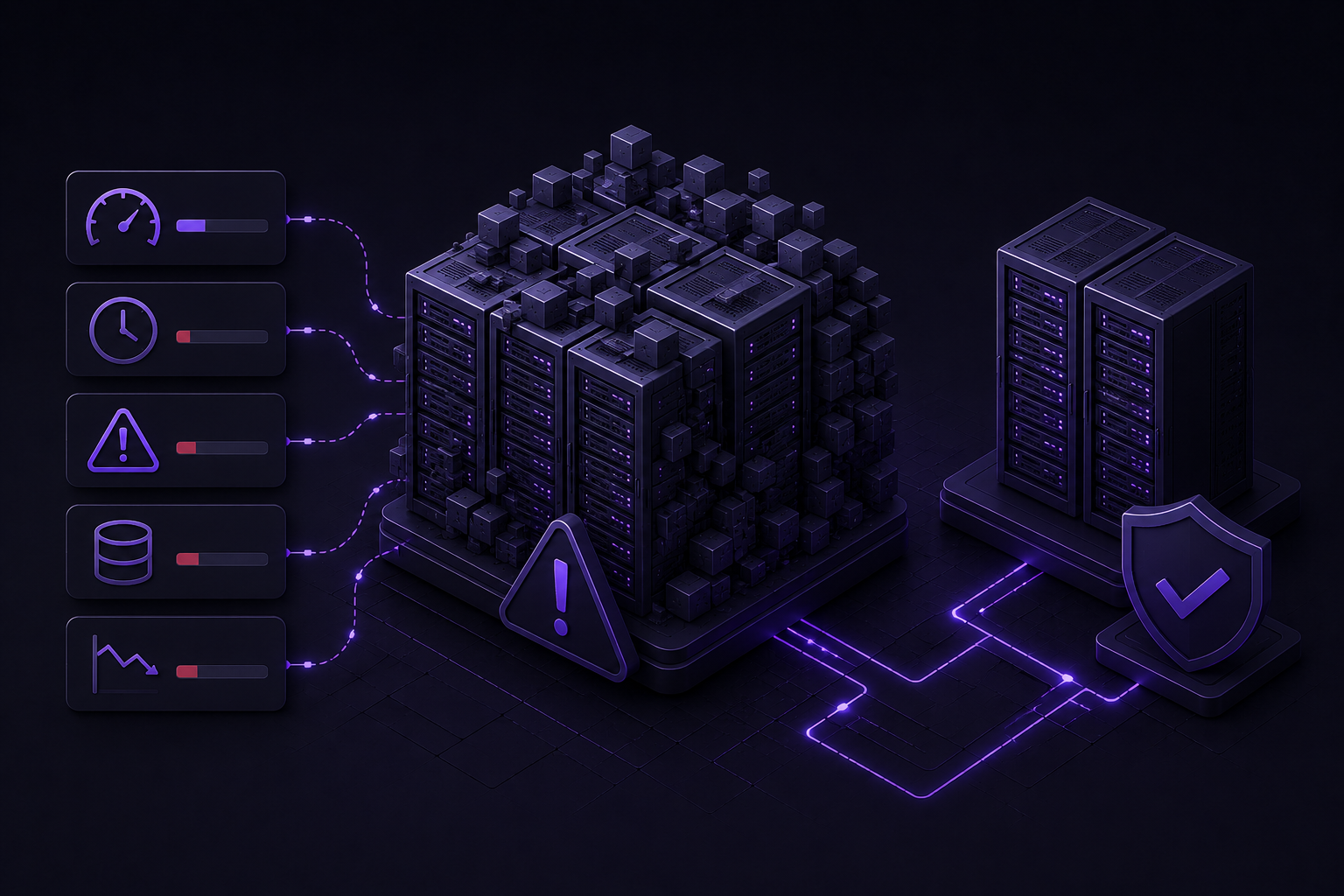
Cheap Hosting Usually Comes With Hidden Tradeoffs
Most hosting providers compete on one thing:
lower prices.
And while cheap hosting sounds appealing upfront, there’s usually a reason those plans cost less than everyone else.
In many cases, the infrastructure is heavily oversold.
That means too many customers are packed onto the same hardware, all competing for the same resources at the same time.
The result is slower websites, unstable applications, inconsistent performance, and infrastructure that starts struggling the moment traffic increases.
What “Oversold Hosting” Actually Means
Overselling happens when hosting providers place more accounts, websites, or servers onto a machine than the infrastructure can consistently support under real-world demand.
On paper, everything looks fine.
But once usage spikes, shared resources become congested.
That affects:
- CPU availability
- Memory usage
- Disk performance
- Network throughput
- Overall responsiveness
And because many environments are shared behind the scenes, one overloaded account can impact everyone else on the node.
The Symptoms Are Usually Easy To Spot
Businesses dealing with oversold hosting often notice the same patterns.
Random Slowdowns
Performance feels inconsistent even when traffic levels haven’t changed.
Traffic Spikes Cause Problems
A temporary increase in visitors suddenly creates instability or downtime.
Slow Admin Dashboards
Backend systems become frustratingly sluggish during peak activity.
High Latency
Applications and websites feel delayed or unresponsive.
“Intermittent” Issues
Problems appear inconsistently, making troubleshooting difficult.
These issues are often blamed on plugins, themes, applications, or user behavior when the real problem is infrastructure saturation.
Why Providers Oversell Infrastructure
The answer is simple:
profit margins.
The more accounts a provider can place on a server, the more revenue that hardware generates.
Unfortunately, performance and stability usually become secondary priorities.
This is especially common in low-cost shared hosting environments where providers assume most users won’t fully utilize resources at the same time.
Until they do.
Why Fair Resource Allocation Matters
Reliable hosting depends on predictable infrastructure performance.
That’s why fair resource allocation matters so much.
When environments are properly managed:
- Performance stays more consistent
- Traffic spikes are easier to absorb
- Resource contention is reduced
- Applications remain responsive
- Infrastructure becomes more stable long term
Businesses may not always see the infrastructure decisions happening behind the scenes, but they absolutely feel the difference when performance remains stable under load.
Hosting Shouldn’t Become A Bottleneck
Infrastructure should support growth, not limit it.
If websites slow down every time traffic increases, or if applications become unstable during busy periods, the hosting environment stops being an asset and starts becoming an operational risk.
That’s why we approach hosting differently.
Our infrastructure is built around:
- Fair resource allocation
- Premium hardware
- Active monitoring
- Security-first management
- Long-term reliability
No overcrowded nodes.
No performance roulette.
No infrastructure surprises.
Better Infrastructure Creates Better Stability
Reliable hosting isn’t just about uptime percentages.
It’s about maintaining consistent performance when businesses actually need it most.
Because when infrastructure stays stable, teams spend less time troubleshooting and more time focused on growth, operations, and customer experience.
And frankly, that’s how hosting should work in the first place.