
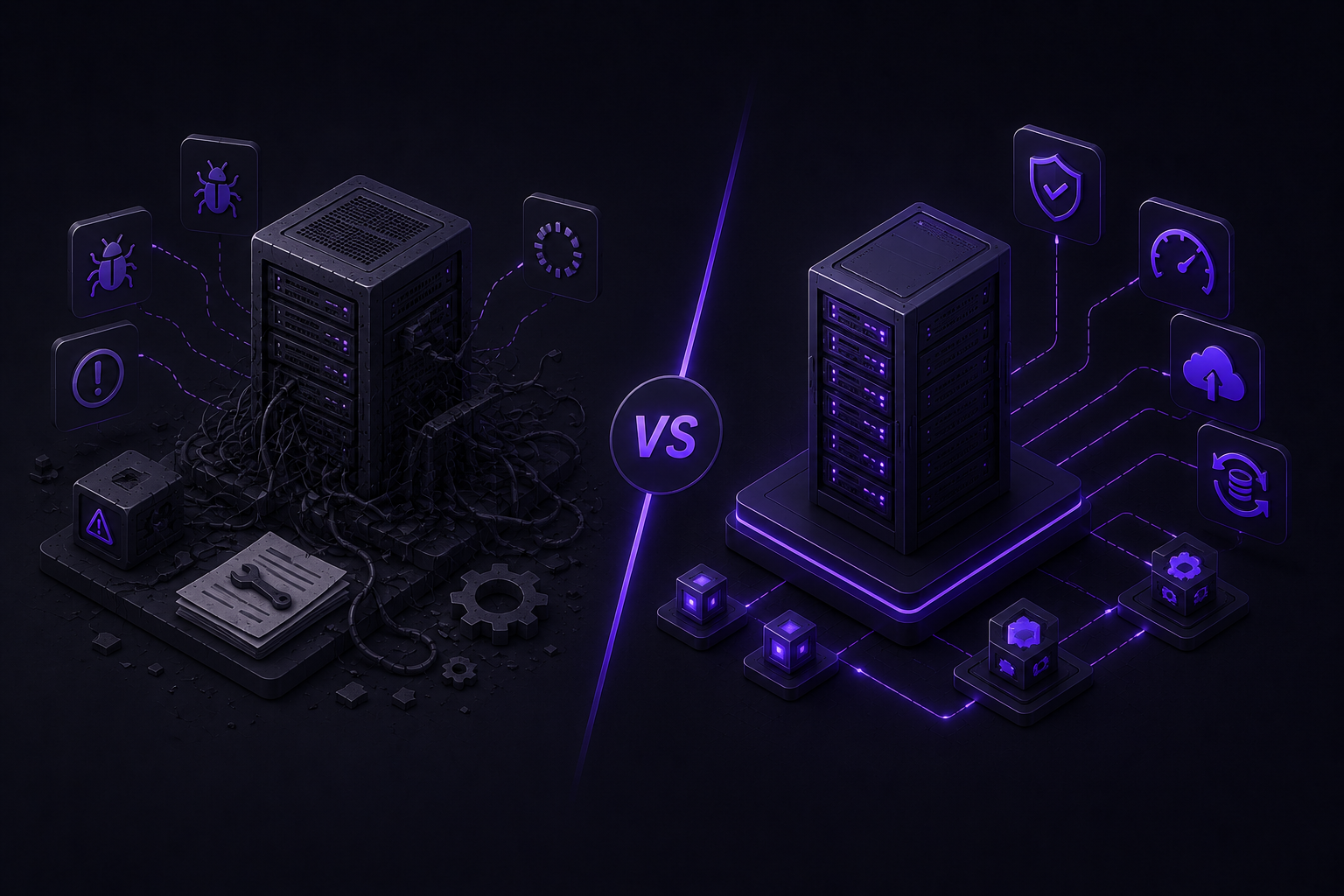
Cheap Infrastructure Often Becomes Expensive Very Quickly
At first glance, unmanaged hosting looks like the smarter financial decision.
The monthly price is lower.
The plans appear flexible.
And for technical teams, the added control sounds appealing.
But for many businesses, the real costs don’t show up until later.
Because once infrastructure problems start appearing, internal teams usually become responsible for handling everything themselves.
And that’s where “cheap hosting” quietly becomes expensive.
What Unmanaged Hosting Actually Means
With unmanaged hosting, the provider typically supplies the infrastructure itself and very little beyond that.
Your team becomes responsible for:
- Server configuration
- Security hardening
- Performance optimization
- Monitoring
- Backups
- Patch management
- Troubleshooting
- Incident response
For experienced infrastructure teams, that may be perfectly acceptable.
For everyone else, it often creates operational overhead they never planned for.
The Hidden Costs Most Businesses Ignore
The monthly hosting bill rarely reflects the true cost of managing infrastructure internally.
Downtime
When issues happen, your team becomes the first line of response.
That means outages can last longer while problems are diagnosed and fixed internally.
Lost Productivity
Developers, operators, and technical staff end up spending time managing servers instead of focusing on growth, products, or client work.
Security Risks
Unpatched systems, weak configurations, and delayed maintenance create unnecessary exposure.
Performance Problems
Without proactive optimization and monitoring, infrastructure slowly becomes less stable over time.
Internal Stress
Even small infrastructure issues become distractions that interrupt normal operations.
The hosting may be cheaper on paper, but the operational costs add up quickly.
When Unmanaged Hosting Makes Sense
Unmanaged infrastructure isn’t automatically bad.
In some cases, it’s the right choice.
It often works well for:
- Internal DevOps teams
- Highly technical operators
- Experimental environments
- Custom infrastructure stacks
- Teams requiring deep server-level control
The problem starts when businesses choose unmanaged hosting expecting simplicity.
Because unmanaged environments require ongoing technical ownership.
Why Many Businesses Prefer Managed Hosting
Managed hosting shifts infrastructure responsibilities away from internal teams.
Instead of maintaining servers themselves, businesses get:
- Active monitoring
- Performance optimization
- Security management
- Backup administration
- Infrastructure support
- Proactive maintenance
That creates more predictable operations and reduces the amount of time spent dealing with technical infrastructure problems.
Which is usually the entire reason businesses seek managed hosting in the first place.
Hosting Should Reduce Operational Complexity
Infrastructure should support growth, not consume internal resources.
When businesses spend more time troubleshooting hosting than running operations, something has gone wrong.
That’s why we approach hosting differently.
Our environments are actively managed, security-focused, performance-optimized, and designed around long-term reliability from day one.
No infrastructure babysitting.
No reactive management.
No unnecessary operational overhead.
The Right Hosting Choice Depends On Your Team
For highly technical organizations, unmanaged infrastructure can offer flexibility and control.
But for many businesses, agencies, and growing platforms, managed hosting creates a more stable and efficient operational model long term.
Because the real value of hosting isn’t just server access.
It’s knowing the infrastructure stays fast, protected, and properly maintained without becoming your team’s full-time responsibility.